Status: Closed beta
Mushin Workbench: Where Consensus Becomes Code
Modern AI coding tools often function as sophisticated co-developers that generate impressive volumes of code. In these common workflows, the generated code usually becomes the only source of truth. The underlying semantic “why” or the original design intent frequently vanishes within transient chat history or becomes obscured as developers manually adjust output to meet immediate requirements. This creates a persistent disconnect where the technical output remains visible while the underlying architectural reasoning, the original design, and the fundamental intent have effectively vanished.
The Core Problem: The Intelligence Gap
Current AI models can be fragile when facing tasks that require abstract reasoning or the application of logic in novel situations. This intelligence gap exists between simple pattern recognition and the genuine understanding required for mission-critical software. When intent is lost during the manual manipulation of generated code, this intelligence gap often expands into an integrity gap.
The Mushin Approach
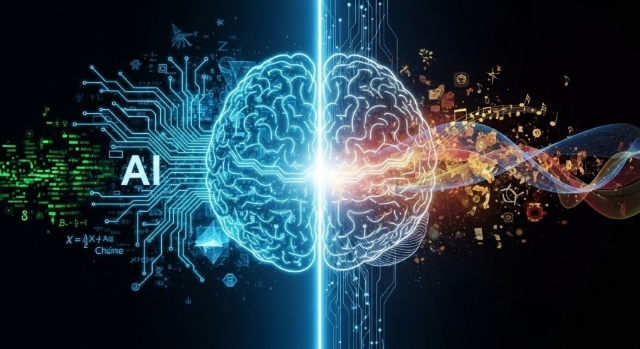
We address this by formally integrating the intuitive capabilities of neural networks with the rigorous logic of symbolic systems. We provide the structured “corpus callosum” that allows these two modes of reasoning to collaborate effectively, preserving the semantic reasoning throughout the entire development lifecycle.
The Blackboard: Stakeholder-Driven Design
The Blackboard provides a collaborative space for founders, architects, and database designers to align on Goal Contracts.
- Discuss and Align Logic: Stakeholders leave comments and constraints directly on the architectural design to reach a shared understanding.
- Consensus First: Synthesis only proceeds once conflicting requirements on the Blackboard are resolved through stakeholder agreement.
- Transparency: Non-technical founders see exactly how their business rules translate into specific system behavior.
The Synthesis Chain: A Neuro-Symbolic Handshake
The Mushin Engine uses a principled design that integrates two distinct sub-systems to ensure code is both creative and provably correct.
Phase 1: Kenshō (Symbolic Synthesis Engine)
Kenshō takes the first pass. This symbolic component handles formal reasoning and establishes the mathematical constraints for the project. It ensures the foundation is built on immutable logic, which helps mitigate the combinatorial explosion common in complex program search spaces.
Phase 2: Kannen (Neural Ideation Engine) and Kenshō Dialogue
Kenshō then engages in a high-fidelity dialogue with Kannen. While Kannen provides the semantic understanding and high-level strategic planning, Kenshō enforces the established symbolic rules. Together, they iterate until the synthesized code is functionally complete and mathematically verified.
Phase 3: The Goal Contract Framework
Acting as the formal interface between Kannen and Kenshō, Goal Contracts translate intuitive plans into verifiable specifications. This ensures the compositional correctness of complex, multi-step solutions. Every module works perfectly within the larger logical fabric because the original “why” is codified directly into the system.
Phase 4: Human-in-the-Loop (Expert Verification)
Once the engine reaches a synthesis milestone, the output is passed to human experts for final review.
Note: The Workbench is a high-performance instrument designed for Product Owners working alongside Nandeshou Experts or their own in-house architects. This ensures the synthesized logic meets the highest standards of mission-critical safety.
Meta-Cognitive Capabilities: The Experience Library
Every successfully synthesized program is stored in a searchable Experience Library.
- Retrieval-Augmented Workflow: The engine learns from previous successes, which accelerates development time over the life of a project.
- Autonomous Growth: As the project evolves, the Workbench expands its conceptual vocabulary to allow for increasingly complex reasoning and more rapid iteration.
The Creative Hook: Customizing Your Baseline
The Workbench is the engine behind Omni. While Omni provides the foundational baseline that every business needs for chat, finance, and HR, the Workbench allows the Product Owner to synthesize the unique features that define their company.
- Safe Extensibility: Synthesize custom modules directly into the Omni unified interface.
- Integrated Reliability: Because you are synthesizing into the core fabric, you avoid the risks associated with broken integrations or third-party plugin failures.
Product Features
The Blackboard Environment (Available Now)
- Our core collaborative design space. Map out your entities, define your data streams, and establish stakeholder consensus in real-time.
Kenshō/Kannen Synthesis Cycle (Available Now)
- The ability to translate natural language goals into verifiable server-side bundles and unified client deployments through our symbolic-neural engine.
Feature Management (Available Now)
- This tool organizes product features by breaking complex designs into separate modules. By decomposing intricate systems into smaller and more reviewable pieces, the platform ensures that every component remains architecturally sound and manageable.
Automated FDIR Synthesis (V2 / Coming Soon)
- Advanced synthesis patterns for Fault Detection, Isolation, and Recovery (FDIR). The engine will automatically synthesize the self-healing logic required for enterprise, industrial, and mission-critical applications.
Usage & Licensing
Direct Use Only: The Mushin Workbench is built specifically for the Product Owner, providing a direct path to architectural synthesis while maintaining full transparency for both technical and non-technical stakeholders. We believe in empowering the people who own the intellectual property.
Stakeholder Collaboration: Additional internal seats are available for project stakeholders, enabling diverse teams to participate in the Blackboard environment and contribute to the collective design intent.
No “Agency Bloat”: We restrict use by third-party outsourcing firms to ensure the platform remains a tool for internal innovation and long-term architectural stability.
Ready to Architect the Future?